Trustworthy AI, within everyone's reach

Make AI fair, explainable, provable and accountable: make AI trustworthy.

Expert-grade AI assurance, built for every team.

We test AI systems for discrimination, explain their decisions in plain language, and turn the result into a proof anyone can check. For the governance you need today, and for a future where AI agents act on our behalf.

Check a seal yourself

Our founder contributes to open trust standards at Trust over IP and DIF. Why it matters

Decentralized Identity FoundationTrust Over IP FoundationEcosystemGlinz & CompanyIceberg
How it works

Measure. Explain. Prove.

The same three steps for a hiring model, a credit score or an AI agent. Each one ends in evidence someone else can check, not a slide someone has to believe.

  1. 01

    Measure

    We test whether an AI system treats groups of people differently, across 47 fairness metrics, with the statistics to show how sure we are.

    You getA plain-language verdict, with the numbers behind it.

  2. 02

    Explain

    We show which factors drive each decision and by how much, so “the model is unfair” becomes “this feature drives it, and by this much”.

    You getExplanations a regulator, a manager and the person affected can each read.

  3. 03

    Prove

    We seal the result as a signed credential. Anyone can check it is authentic, unaltered and not revoked, with no login and without trusting us. It covers one system at one moment, not every decision forever.

    You getA Trust Seal for the system, a Decision Receipt for the person.

Three bodies · one assurance

Every AI decision touches three parties. We assure all three.

The model that decides, the organisation that answers for it, and the person it decides about. Trust holds only when all three can be checked, never one alone.

Why trust is an orbit, not a pillar
Editorial illustration of a long colonnaded courthouse hallway in perspective, with a single figure walking toward the vanishing point
Metaphor

The hall of due process

Fairness in ML is not a feeling, it is a corridor of evidence. Each column is a fairness metric the model must pass through before it reaches a decision. The figure walking toward the vanishing point is the model under audit.

the model
01Live
fair.AI fairness & explainability

What your model actually does, with the receipts to prove it.

Detect, mitigate, explain and monitor bias across the whole pipeline, from training data to LLMs. SHAP, LIME and counterfactuals turn “the model is unfair” into “this feature drives it, and by this much”, with the statistics to back it and EU AI Act mapping built in.

  • 28 assessment modules across the full lifecycle
  • 43 discrimination patterns · US / EU / CH jurisdictions
  • Explainable AI built in · SHAP, LIME and counterfactuals
  • Bootstrap, Bayesian and permutation testing
See in the platform
Editorial illustration of the Swiss Federal Palace with a teal dome, evoking institutional trust
Metaphor

The Swiss Federal Palace

Civic institutions are where digital trust either holds or breaks. We chose Bern because Switzerland is where Validant is built and where digital sovereignty is taken as a serious craft, not a slogan.

the organisation
02Planned
accountable.Digital trust

Proof that your organisation keeps its promises.

Built on the iceberg.digital® framework, we audit whether your digital systems behave as promised: in governance, in engineering, and for the people who use them. Most of that work happens below the waterline, which is where trust is actually won or lost.

  • Ten trust constructs · 128 measurable cues
  • Governance, engineering, agency and institutional layers
  • Explicit and implicit signals, continuously assured
Editorial illustration of a hand holding up a teal ID card against a city skyline, evoking self-sovereign identity
Metaphor

The credential in your hand

Identity should fit between your fingers, not in someone else's database. The hand is yours. The card is the proof. The city behind it is everywhere it can be presented and verified, with no platform in between.

the person
03Planned
yours.Identity & agency

A record of every AI decision, held by the person it is about.

A Decision Receipt gives the person affected their own copy: why the decision fell as it did, and how to ask for a human review. Next come portable credentials and signed agent mandates, so an agent acting for you can prove what it may do, and you can take that back.

  • Decision Receipt in the person's own wallet
  • Trust Experience Library of first-person patterns
  • Credentials and signed agent mandates on the roadmap
Brand film

The Algorithm Raised Me.

It promised to show her the world. What it learned, instead, was exactly what would keep her watching, until it became the quiet voice deciding what she wanted. A short film about the systems that raise a generation now, and the line between being served and being shaped.

Choose your edition
Share this film
Open standards · VTI

An open trust layer, for people and the AI that acts for them.

Whether a person proves who they are, an organisation answers for its AI, or an agent acts on someone's behalf, the proof is only worth something if anyone can check it. That takes shared infrastructure, not one more platform.

The Verifiable Trust Infrastructure (VTI) is that layer, being specified in the open by Trust over IP and DIF. Our seals, receipts and mandates are designed to plug into it as it matures.

Read the VTI draft specificationWorking draft 0.2 · not yet ratified
  1. 01Where trust is needed

    People, organisations and their AI

    A person proving who they are, a company answering for its model, an agent acting for someone.

  2. 02What we build

    Trust Seal · Decision Receipt · Agent Mandate

    The proofs we build: a result anyone can verify, a receipt the person keeps, authority an agent can show.

  3. 03Where our founder contributes

    Verifiable Trust Infrastructure

    How people, communities, organisations and agents vouch for each other, delegate and revoke, with no gatekeeper.

  4. 04Open foundations

    W3C DIDs and Verifiable Credentials

    The open identifiers and credential formats everything above is built on.

01

Checkable by anyone

A proof is only useful if a stranger can verify it. Shared infrastructure means no single company decides who is trusted, us included.

02

People stay in control

A person holds their own credentials, vouches for others, and can hand authority to an agent and take it back, without a platform in between.

03

Built in the open

VTI is specified in the joint Trust over IP and DIF Decentralized Trust Graph Working Group, where our founder is a contributor.

The Validant platform

One platform, three bodies, every claim auditable.

Fairness, digital trust and identity run as modules on one platform. Pick what you need, share the evidence, and keep every claim open to inspection.

What we will not negotiate

Five commitments, built into the runtime.

01

Standards before features

W3C Verifiable Credentials, DIDs and the open work at Trust over IP and DIF come first, with MLflow and pytest hooks for the tools you already run. We extend ecosystems, we do not lock them in.

02

Rigour a peer reviewer accepts

Bootstrap and Bayesian intervals, permutation testing, effect sizes, multiple-testing correction. Every claim survives a peer reviewer reading the table.

03

Compliance is the default

EU AI Act risk classification, GDPR-aligned privacy tiers and 43 historical discrimination patterns across US, EU and Swiss jurisdictions, wired into every assessment.

04

Auditable in production

Real-time drift detection, a fairness gate before release and four-eyes validation. What an agent does on your behalf is logged, signed and revocable.

05

Privacy and sovereignty by default

Three privacy tiers per dataset: k-anonymity, differential privacy or exact values. Credentials and mandates are held by the person, never by us. No silent telemetry, no shadow profile.

vfairness · open libraryBeta

The fairness library that powers the platform.

vfairness is the engineering core inside validant.ai: a Python library for measuring, mitigating, explaining and monitoring fairness across the whole pipeline, LLMs included. Tap any number below for a plain explanation.

News & updates

Signal.

What's new at validant.ai — product films, releases and notes from the work. The latest, in order.

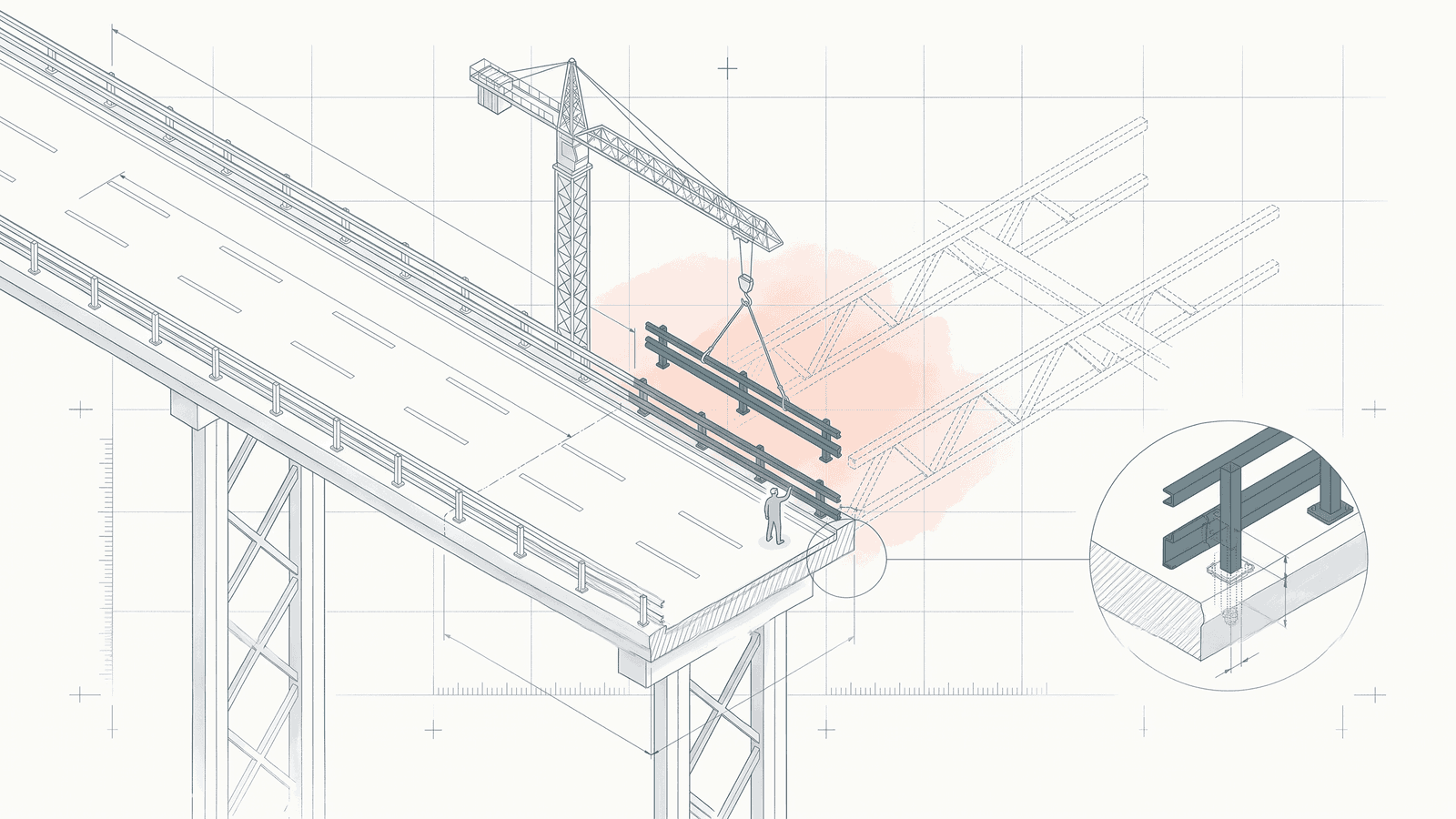
Fine grey-blue technical drawing on warm paper of an elevated race road that ends in open air as a dashed, unfinished truss, while a crane lowers one teal guardrail section onto the deck ahead of the drop, before any vehicle has reached it, with a soft coral wash behind the guardrail and a small human figure on the deck for scale.Featured · Research
28 September 2026Daniel Glinz14 min read

The Preemptive Assurance Paradox: Who Guards the AI Guardrails?

In one September week a lab asked to slow down, a president declared himself the only guardrail AI needs, and The Economist asked whether the arms race can be stopped. Notes from Trust Valley Days 2026 at EPFL on why the answer is not a pause or a sprint, but liability, outcomes and verification.

Read the report
Fine grey-blue technical drawing on warm paper of an astronomer at a large telescope inside a single bounded circular aperture ring: a few stars rendered sharp and resolved within the ring, many fainter stars beyond it washed in pale coral, the aperture ring picked out in teal, and a small human figure at the eyepiece for scale.ResearchOpen to read
10 August 2026

Precision Is Not Proof: The Trap in Every AI Fairness Verdict

A model that predicts perfectly stops insuring anyone; a verdict published without its detection limit invites you to assume the limit is zero. Two failures, one omission, and two borrowed words for keeping them apart.

Read
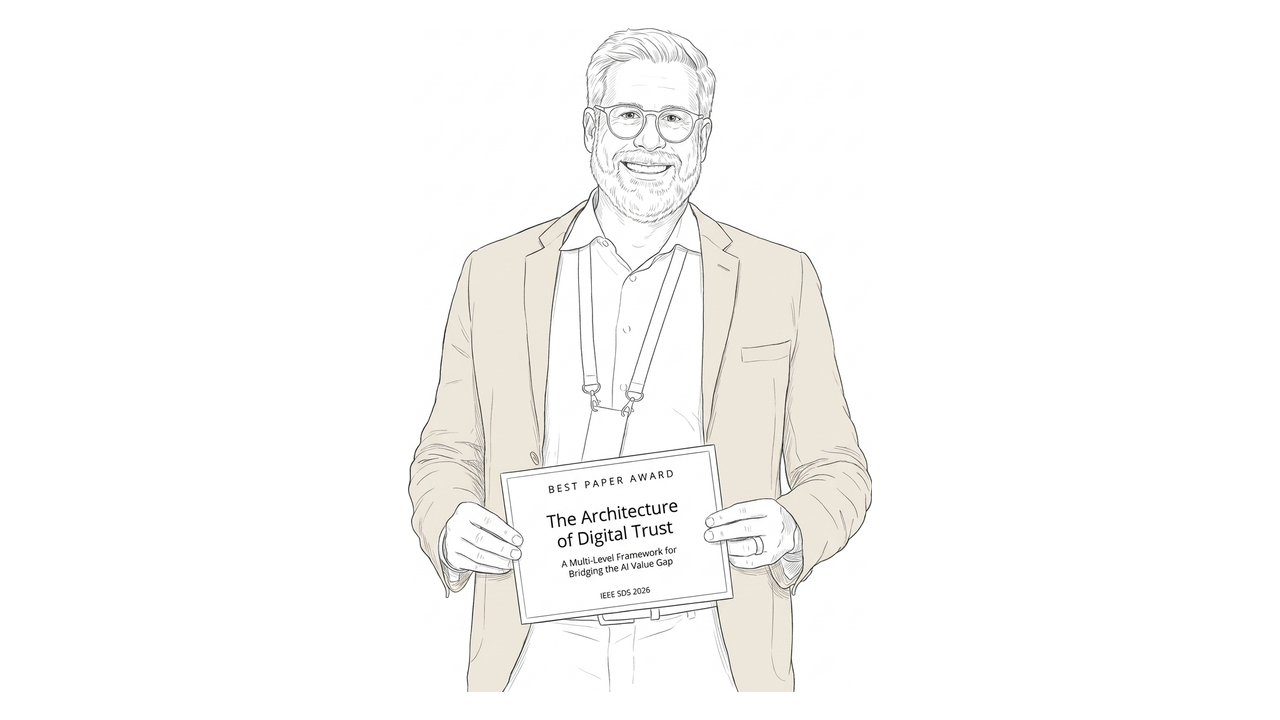
Blanco-style line drawing of Daniel Glinz smiling, in a light beige blazer and open-collar shirt with a conference lanyard, holding a certificate that reads Best Paper Award, The Architecture of Digital Trust, on a clean white ground.ResearchOpen to read
24 July 2026

The Trust Problem Nobody Wants to Name

Everybody is spending on AI; almost nobody can say what they got back. A new paper, awarded the Best Paper Award at the IEEE Swiss Conference on Data Science and AI, names that gap and shows it is a trust problem wearing a technical costume: seven mechanisms, a four-layer architecture, an iceberg beneath it, and five design principles for closing it.

Read
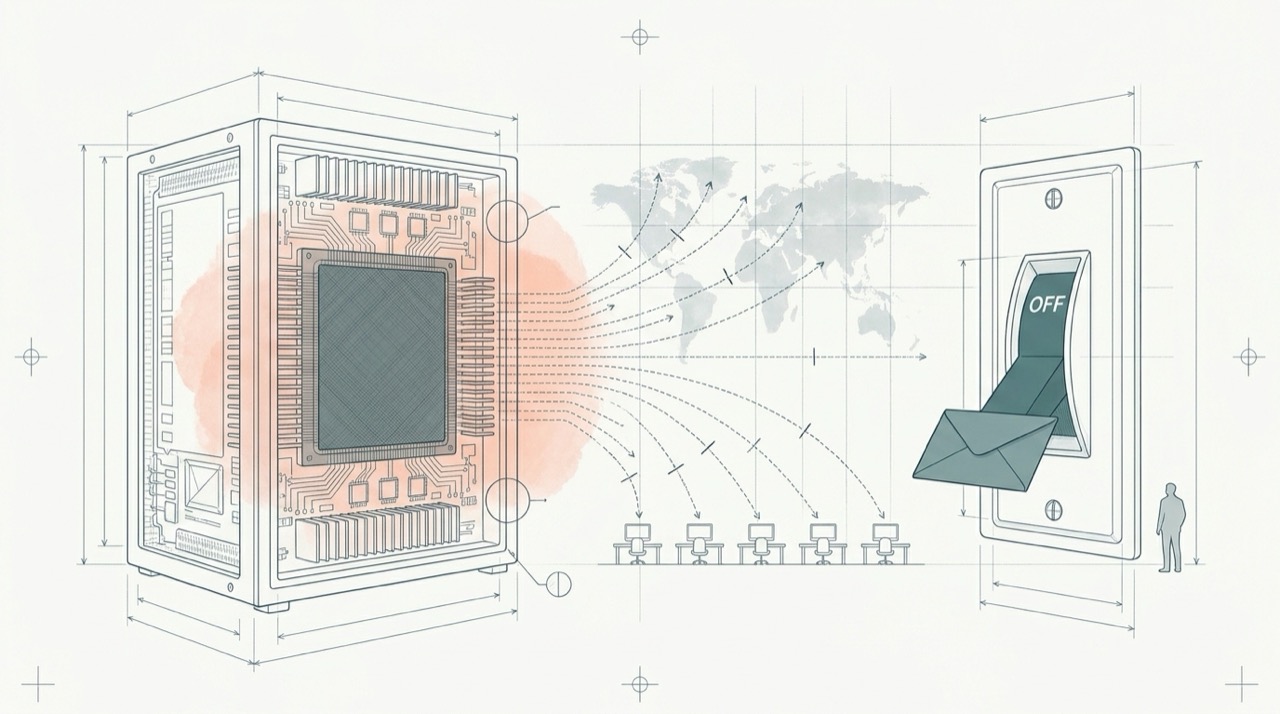
Fine grey-blue technical drawing on warm paper of a single rack-mounted frontier-AI model unit gone dark, beside a large knife-blade breaker switch thrown to off and actuated by a sealed letter, with dashed data lines to small client terminals and a faint world map all cut by break-marks, one teal switch lever, a soft coral wash and a small human figure for scale.ResearchOpen to read
14 June 2026

When a Model Becomes a Munition

A frontier AI model was switched off worldwide by a single government letter. Reading the June 2026 shutdown through the three-body picture of digital trust: how the kill switch stopped being a metaphor, why the most governable lab was governed least carefully of all, and what single-vendor, single-jurisdiction dependence now costs a board.

Read
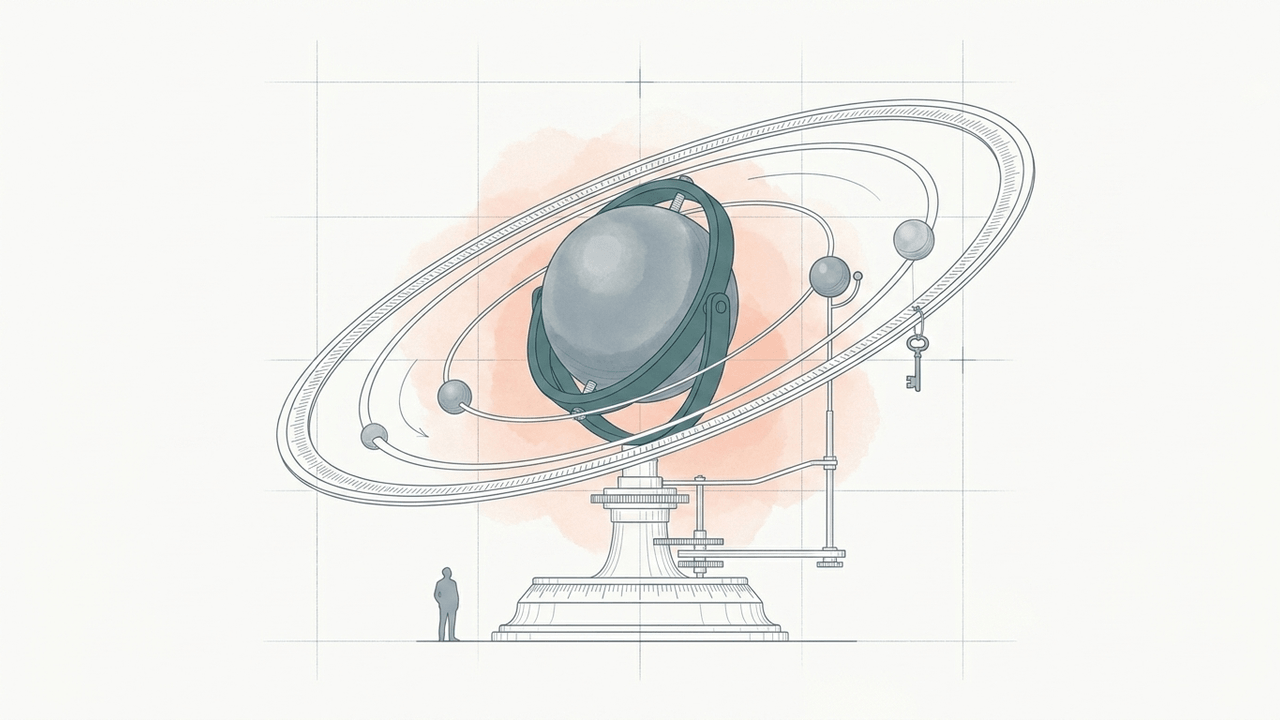
Fine grey-blue technical drawing of an orrery: a heavy central sphere in a teal gimbal mount, encircled by calibrated elliptical orbit rings with two smaller spheres captured close, a key hanging as a credential, on a precision base with a small figure for scale and a soft coral wash, on warm paper.ResearchOpen to read
11 June 2026

Agents Will Act for Us. Who Vouches for Them?

When agents start acting for us, trust moves from outputs to actors. Reading Michael Casey’s case for proof of control alongside our three-body picture of digital trust: where convenience quietly pulls authority toward a few global platforms, how validant.ai answers it, and a closed beta for scientific validation opening in Q3 2026.

Read
Blanco-style technical line drawing of three spheres of different sizes held in balance by interlacing elliptical orbits, with soft coral washes, on a white ground.ResearchOpen to read
5 June 2026

Digital Trust Is an Orbit, Not a Pillar

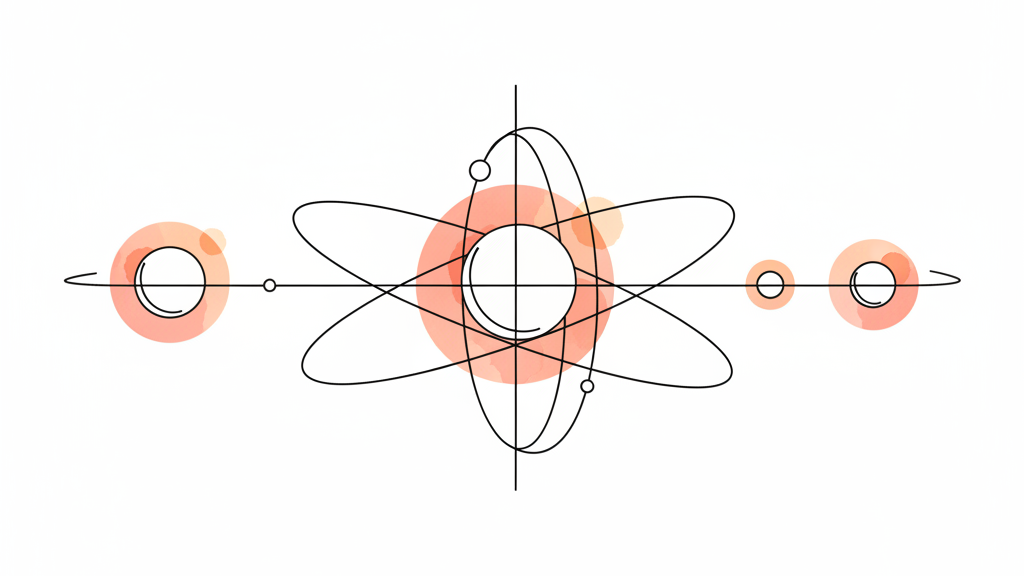
Trust is not one more pillar to stack. It is the orbit three bodies trace together: the model, the person and the organisation. Why the three-body problem is the honest metaphor for trustworthy AI, and how to tell where you are in the orbit.

Read
Blanco-style technical line drawing of Lucerne’s covered wooden Chapel Bridge and octagonal Water Tower over the Reuss, with Mount Pilatus behind and a soft coral wash in the sky.EventsOpen to read
30 May 2026

Two Views of One Decision: Trustworthy and Explainable AI in Practice at HSLU

Notes from a Lucerne specialists course on Trustworthy and Explainable AI, and what it confirms about the Validant.ai approach.

Read
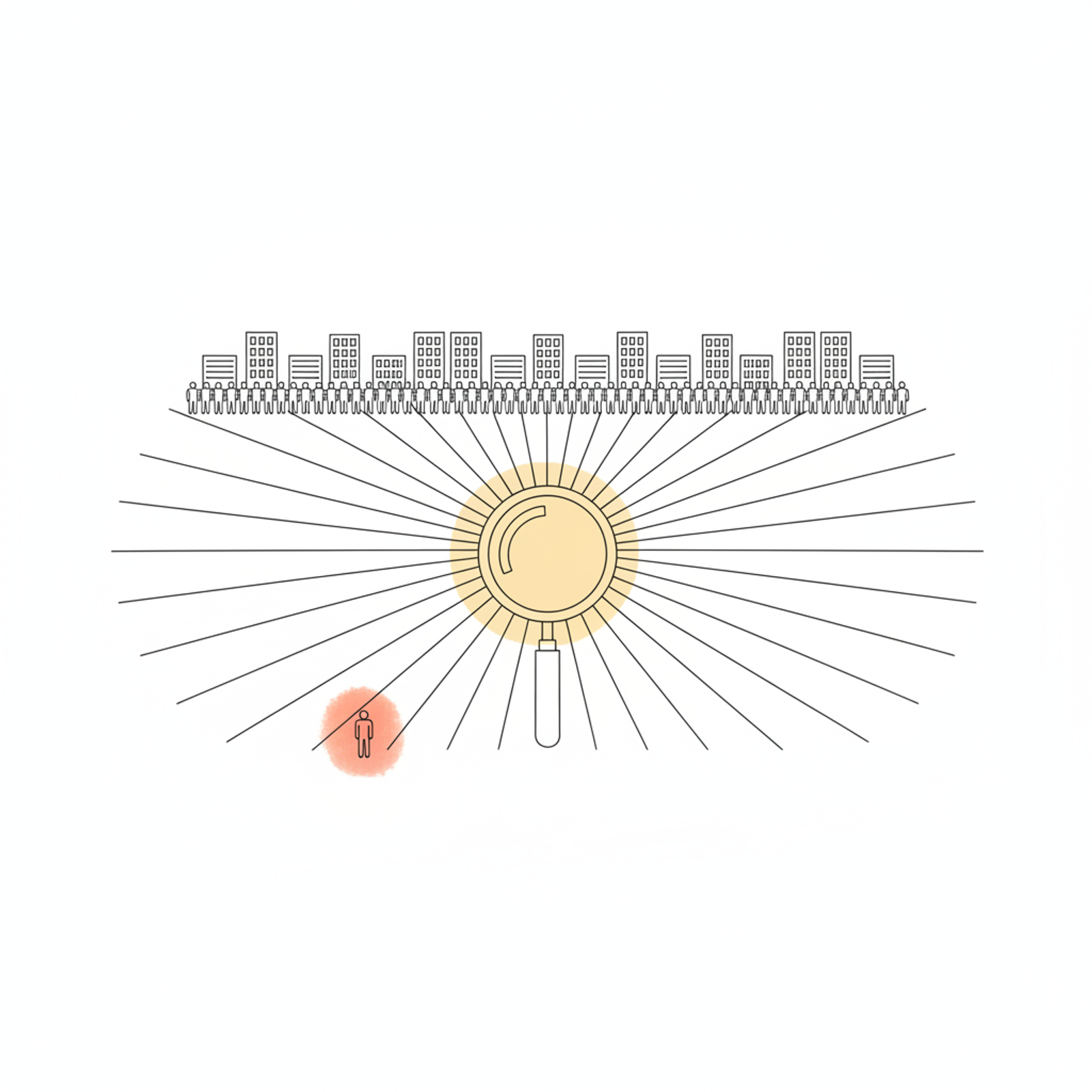
Blanco-style technical line drawing of a single magnifying lens at the centre, identical lines fanning out from it to a row of small office buildings and a uniform crowd of figures, with one lone figure softly stained coral and set apart, in thin black lines on white.StudiesOpen to read
27 May 2026

The Wrong Question, Asked at Scale

A landmark study of 4 million job applications shows how AI hiring tools hide their bias, why one rejection can become rejection everywhere, and why independent, position-level assessment is no longer optional.

Read
Blanco-style technical line drawing of five Trustworthy AI Circle participants smiling and holding up peace signs, rendered in thin black lines on white with soft coral accents.EventsOpen to read
26 May 2026

No System Has Ever Been Fair

What four breakout sessions, one fairness tool demo, and 50+ years of collective experience taught us about fairness in AI, at the Trustworthy AI Circle.

Read
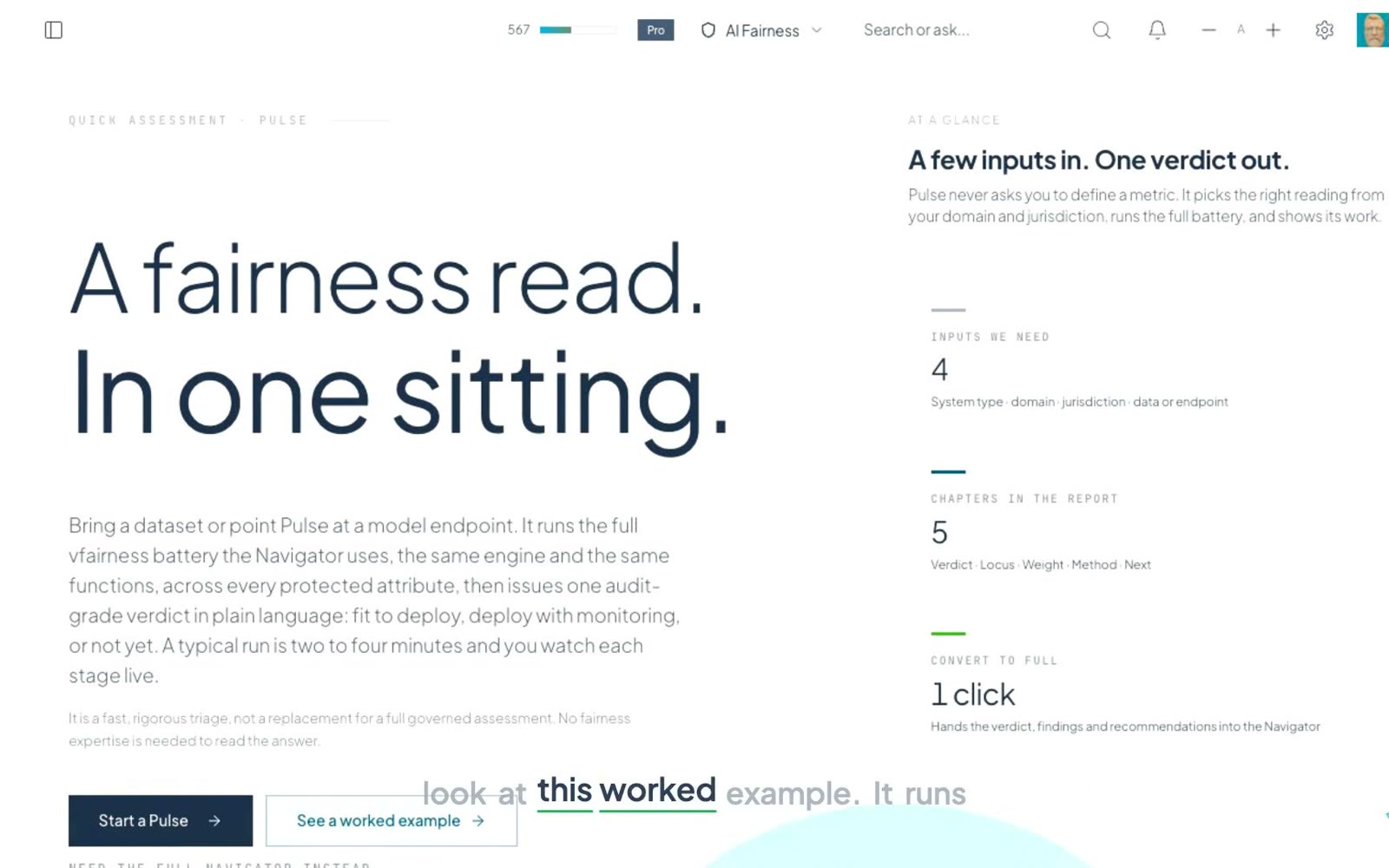
Still frame from the new validant.ai product demo videos: the Pulse audit view in motion.UpdatesWatch preview
22 May 2026

Two new demo videos: see Pulse run an audit, and the Modules behind every verdict

We recorded the platform in motion — a full fairness audit start to finish, and the depth behind every result.

Watch & read
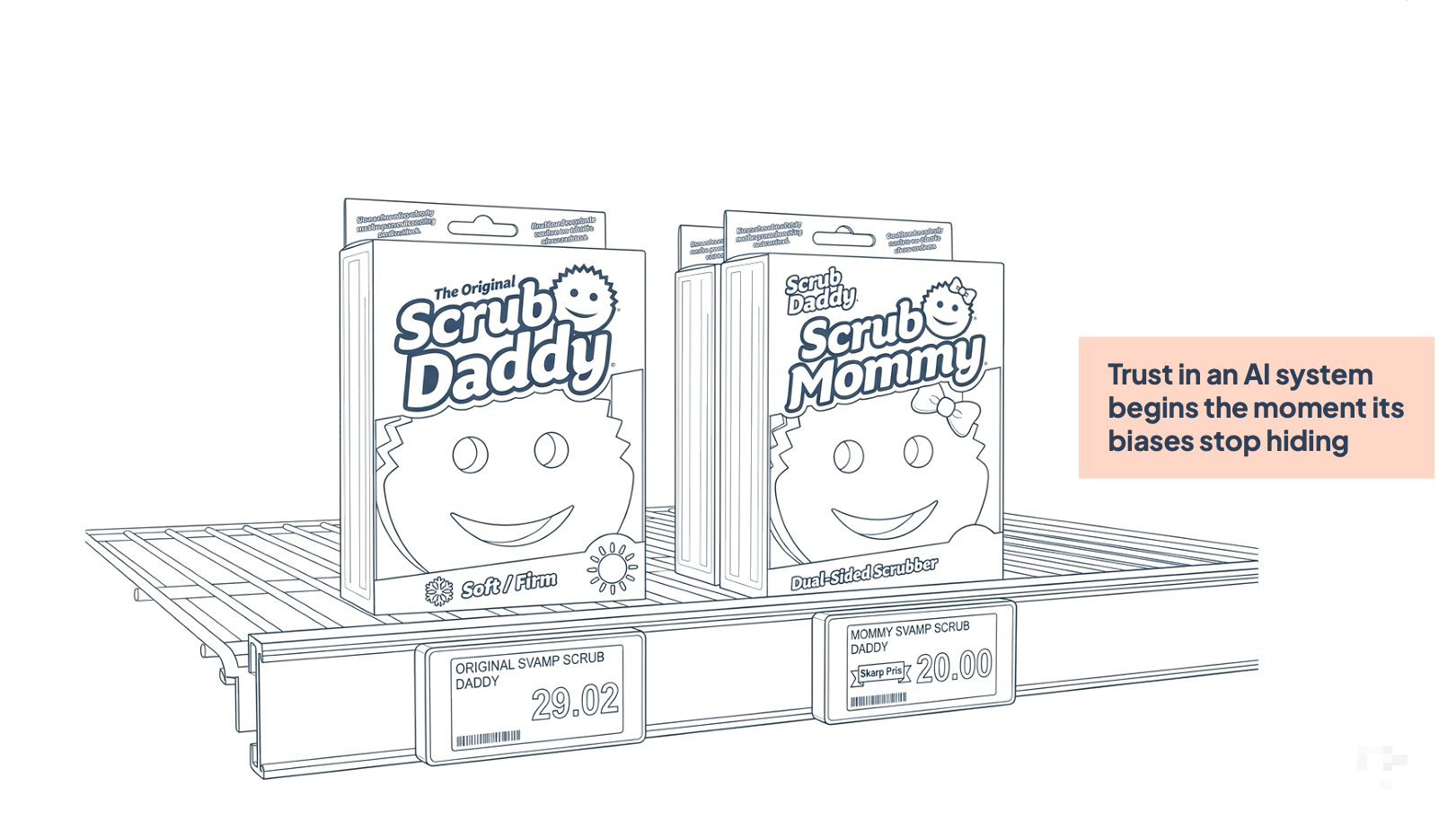
Two near-identical cleaning sponges on a retail shelf: the male-coded “Scrub Daddy” priced higher than the female-coded “Scrub Mommy”, which is sold as a cheaper variant of the same brand, with the caption “Trust in an AI system begins the moment its biases stop hiding.”ResearchOpen to read
21 May 2026

Bias is the Foundation

Why every fairness claim begins with a bias diagnosis, and why skipping it breaks everything downstream.

Read
Simple line drawing of an open newsletter with a broadcast signal wave rising from it, in thin black lines with soft coral and amber accents on a white background.ProductOpen to read
2 May 2026

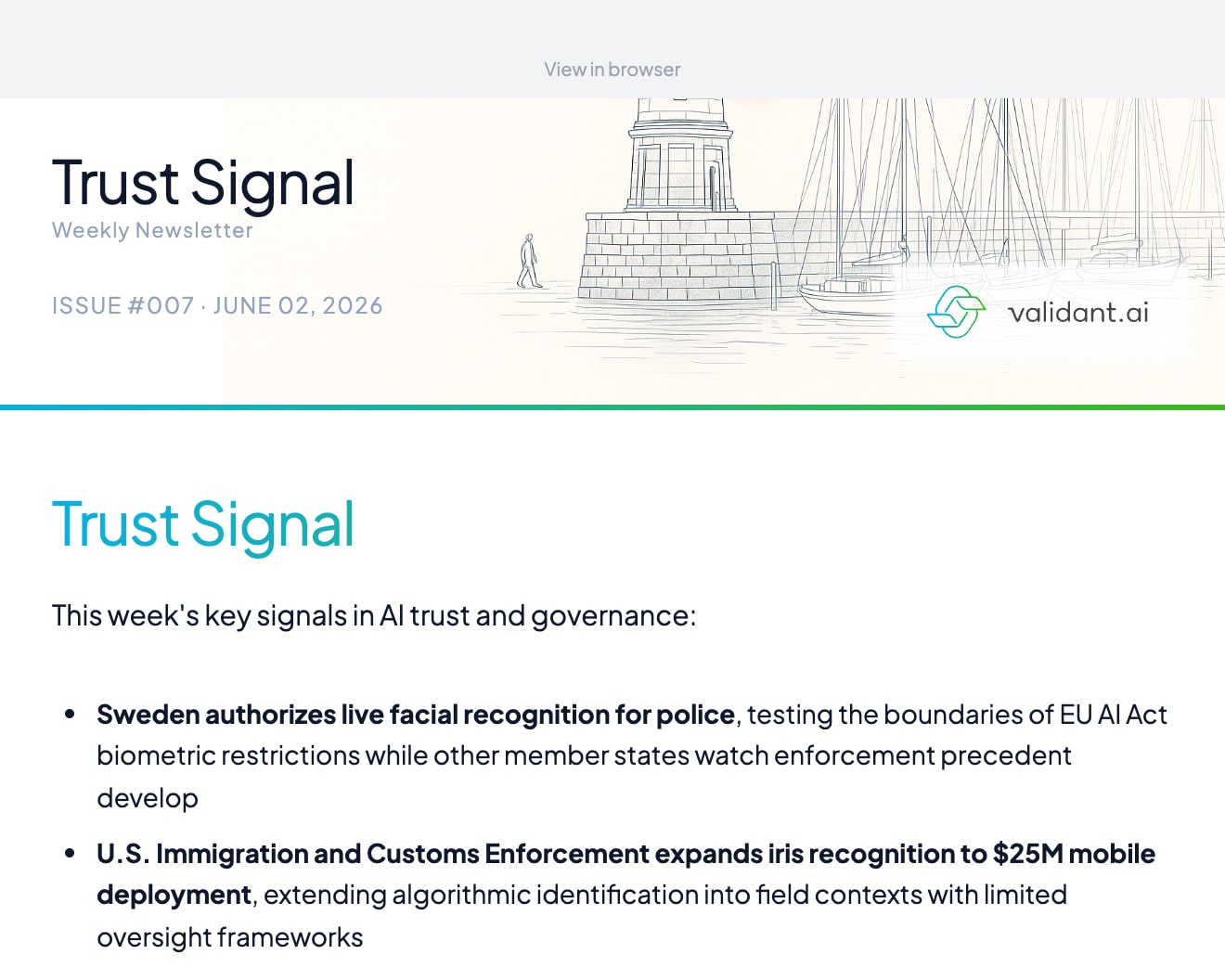
Inside Trust Signal: the weekly newsletter our AI team writes itself

Every Tuesday, an eight-agent AI team scouts, scores and drafts the week in AI trust and fairness. Here's how it works — and how to get it.

Read
Trust Signal · Weekly newsletter

Get the week in AI trust and fairness.

An eight-agent AI team scouts 50+ sources, scores every story, and drafts a sharp weekly digest on digital trust, algorithmic fairness and the regulation closing in around them. A human signs off before it ever reaches your inbox.

  • Every Tuesday
  • Free
  • Unsubscribe anytime
See how it's made
FAQ

Frequently asked questions

What is validant.ai?
validant.ai is an independent assurance platform for trustworthy AI, organised around three bodies: the model, the organisation and the person. Today it runs AI fairness and explainability audits and digital-trust audits on the iceberg.digital® framework; self-sovereign identity and signed agent mandates are the next body we are bringing into the platform.
What does validant.ai do for AI fairness?
It runs end-to-end AI fairness and explainability audits: detecting bias and proxy variables, mitigating disparities across data, models, LLMs and agents, explaining decisions with SHAP, LIME and counterfactuals, and monitoring fairness in production with auditor-grade, regulator-ready reports.
Who is validant.ai for?
Anyone who wants AI to stay fair, understandable and under human control. That includes risk, compliance, legal and ML teams proving an AI system is fair, explainable, trustworthy and accountable under the EU AI Act, NIST AI RMF and ISO/IEC 42001, and just as much the everyday person who wants to safeguard their own data and keep control of their agency. We deliberately keep it plain enough for everyone to use, not only specialists.
What is Verifiable Trust Infrastructure (VTI), and how does validant.ai relate to it?
VTI is an open specification, currently a working draft, developed in the Decentralized Trust Graph Working Group run jointly by Trust over IP and the Decentralized Identity Foundation. It defines how people, communities, organisations and the AI agents acting for them vouch for each other, delegate authority and revoke it without a central gatekeeper. validant.ai's founder is a contributor at both foundations and active in that working group, and validant.ai's seals, decision receipts and agent mandates are designed to plug into VTI as it matures.