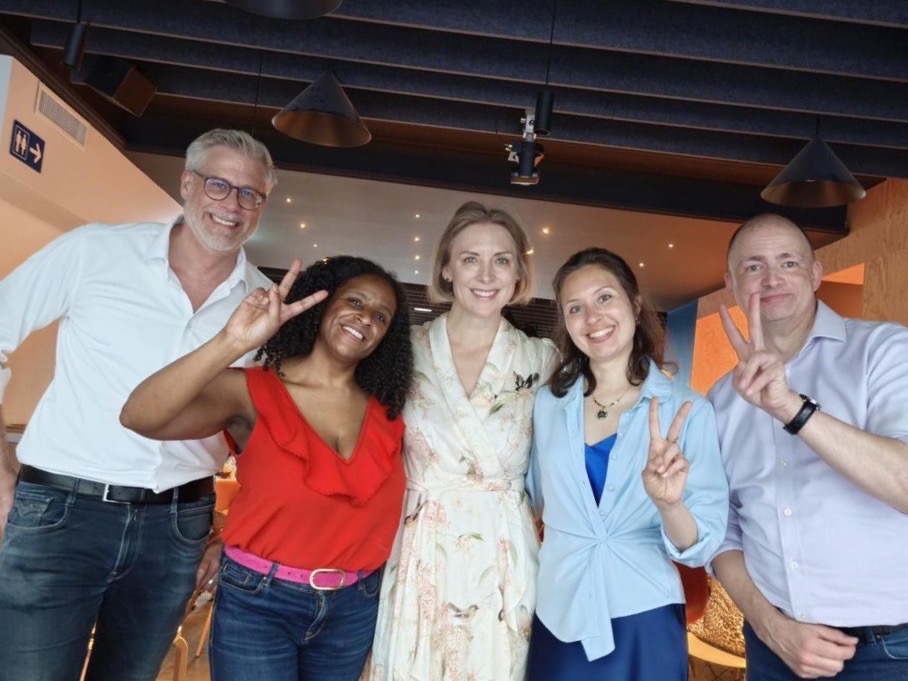
What four breakout sessions, one fairness tool demo, and more than fifty years of collective experience taught us about fairness in AI. From the Trustworthy AI Circle, “All is fair in AI, or is it?”
The one answer we could agree on
We opened the Trustworthy AI Circle with more than fifty years of combined professional experience in the room, and we reached exactly one clean conclusion: no system has ever been fair. No single definition of fairness holds across contexts, roles, and individuals.
That sounds like a dead end. It was the opposite. It was the only honest place to start. Everything genuinely useful that followed depended on getting that admission out of the way first, so the session was not about manufacturing consensus. It was about cleaning the fluff off a word that everyone uses and almost no one defines the same way.
The experiment: four rooms, one tool
To make the abstraction concrete, we split the room into four groups and gave each one an organisational role: Board, Operations, Business, and Compliance. Then we handed all four the same scenario, a company introducing an AI-based recruitment tool, and asked a deceptively simple question. From your seat, what would “fair” actually mean?
Then we got out of the way and let the room be the experts.
Finding 1: Fairness is irreducibly plural
Every group produced a different definition of fairness. Every definition was internally coherent. Not one group claimed its definition was costless.
This is the result I keep returning to. “Fair” is not a property of the tool that you can measure once and certify. It is a negotiated outcome between stakeholders who carry different primary obligations. The Board answers to long-term value and reputation. Compliance answers to the law. Business answers to performance and explainability. Operations answers to process and auditability. Each was right from where it sat, and the definitions did not reconcile into a single number.
If fairness were a property of the system, four expert groups looking at the same system would converge. They did not. They diverged, cleanly and defensibly, which tells you the property lives in the relationships around the tool, not inside it.
Finding 2: Even “transparency” splinters
Every group demanded transparency. That felt like common ground until we compared notes, and the word turned out to mean four different things.
Business meant explainability of the recommendations. The Board meant cultural accountability for the decisions made. Legal meant controlled, defensible disclosure. Operations meant an auditable, reproducible process. One word, four incompatible requirements. If a vendor promises “transparency” and a buyer hears one of these four meanings while the vendor delivers another, the gap does not show up until the system is already in production and someone is asking who is accountable.
Finding 3: AI is a mirror, not a source
In my part of the session I worked through where this lands in hiring, because recruitment is where the abstraction stops being academic. The lesson there is uncomfortable and worth stating plainly: AI does not invent inequality. It holds up a mirror.
A recruitment model learns from historical hiring data, and historical hiring data encodes historical preference. Even when you strip out protected attributes, proxies leak the same signal back in. University prestige correlates with socioeconomic background. Resume language carries it too, with terms like “led” and “executed” scored more favourably than “collaborated” and “supported.” The most cited public example, an early large-tech recruiting tool that learned to downgrade resumes containing the word “women’s,” did not create a new bias. It reproduced one that was already in the training data, then applied it at scale with the calm confidence of something that looks objective.
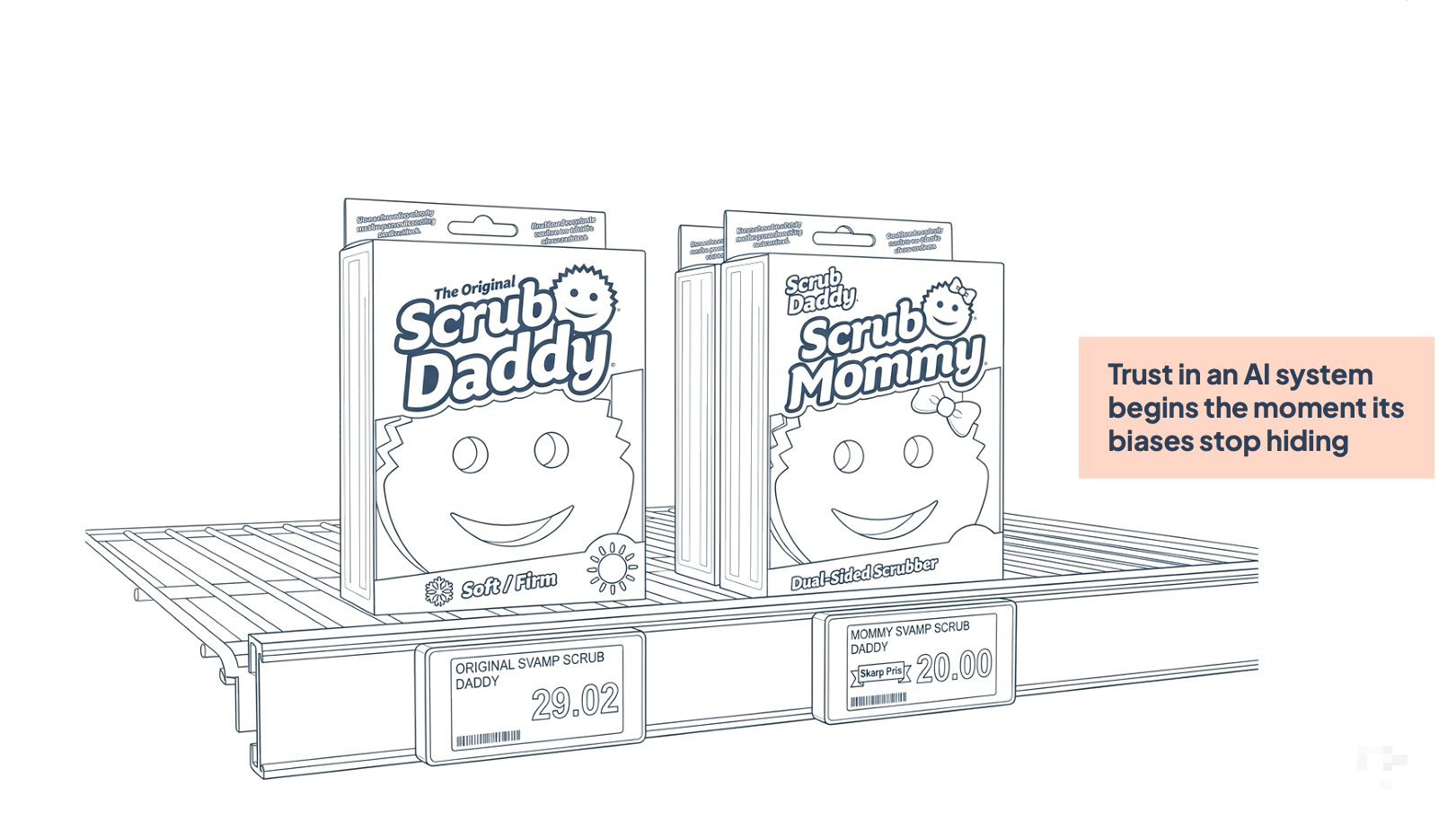
This is the double edge. AI perpetuates existing bias with shocking efficiency and cements it into daily decisions. In the same motion, it makes that bias legible. It pulls a pattern that was diffuse and deniable into a chart you can point at, which forces the question we used to be able to avoid: is this okay?
“Making bias visible rather than asserted is the whole point. You cannot negotiate a trade-off you refuse to look at.”
Finding 4: We started with metrics and ended with ethics
We came in expecting a conversation about metrics and tools: demographic parity, equal opportunity, equalised odds, calibration. We left having established that the metric is the last step, not the first.
A fairness metric on its own is only “something to look at.” Situational context is what turns it into a basis for a decision. The same disparity number can be statistical noise in one setting and a serious harm in another, and only the context tells you which. Strip the context away and you have a number. Keep it and you have accountability. So before you can meaningfully operationalise something as complex as fairness, you need a discussion that is led by ethics and grounded in the specific situation. The maths comes after that, not before.
Finding 5: There is always a loser
No group escaped the trade-off. Every fairness definition advantages someone and disadvantages someone else. Equal opportunity protects against missing qualified candidates but does not guarantee equal representation. Demographic parity does the reverse. You cannot satisfy all of them at once, and the research literature is clear that several of these definitions are mathematically incompatible.
So the real decision is not “is this system fair.” It is “who are we willing to let lose, and can we defend that choice.” That is a values decision wearing a technical costume, and pretending otherwise is how organisations sleepwalk into harm with a clean compliance file.
What this means for organisations
A few practical consequences fell out of the day.
- 01Each organisation has to define its own set of values and make them explicit. Fairness cannot be outsourced to a default setting in a tool.
- 02Stakeholder interests have to be surfaced, discussed, and explicitly weighted, rather than left to whoever happens to own the procurement decision.
- 03Shareholder value can no longer reign alone. It has to be weighed against long-term customer value, with equitable access that is evidenced, transparent, and accountable to the Board.
- 04None of this is a one-time exercise. The right answer moves as society, technology, and human values move, so the weighting has to be revisited, not set once and filed.
Where Validant.ai fits
This is the gap I built Validant.ai to close. The platform does not exist to stamp a system “fair,” because that stamp would be dishonest. It exists to make the trade-offs explicit, evidenced, and auditable: an independent read on who a system advantages, who it disadvantages, and whether that choice was made consciously and defensibly.
Think of it as a ratings function for AI fairness. Not a verdict that ends the conversation, but an evidence base that makes the conversation accountable, that connects the metric back to the context, and that gives a Board something it can actually stand behind. Fairness, mathematically, may never be fully achievable. Choosing consciously who we are willing to let lose, documenting that choice, and updating it as the world changes, that is achievable, and that is the work.
The race for clarity
Fairness research has been running for decades. The definitions keep multiplying and the finish line keeps moving. It would be easy to read that as failure. It is not. The only real failure would be to stop running for clarity, or worse, to declare that we have already arrived.
A good panel is not manicured agreement. It is different lenses, real friction, and the questions that actually need asking. That friction is not a problem to be smoothed over. It is human, it is necessary, and it is where the change actually happens.
Daniel Glinz works on AI fairness, digital trust, and regulatory readiness, and is the creator of Validant.ai. If your organisation is working through these same questions, he partners directly with companies to make their AI biases transparent and to think through the trade-offs each fairness choice forces. Get in touch to continue the conversation, see a demo, or learn how to make bias visible in your own systems.
Working through where fairness lands for your own systems? Get in touch to see a demo, or to learn how to make your AI biases transparent and navigate the trade-offs they force.
 StudiesOpen to read
The Wrong Question, Asked at Scale
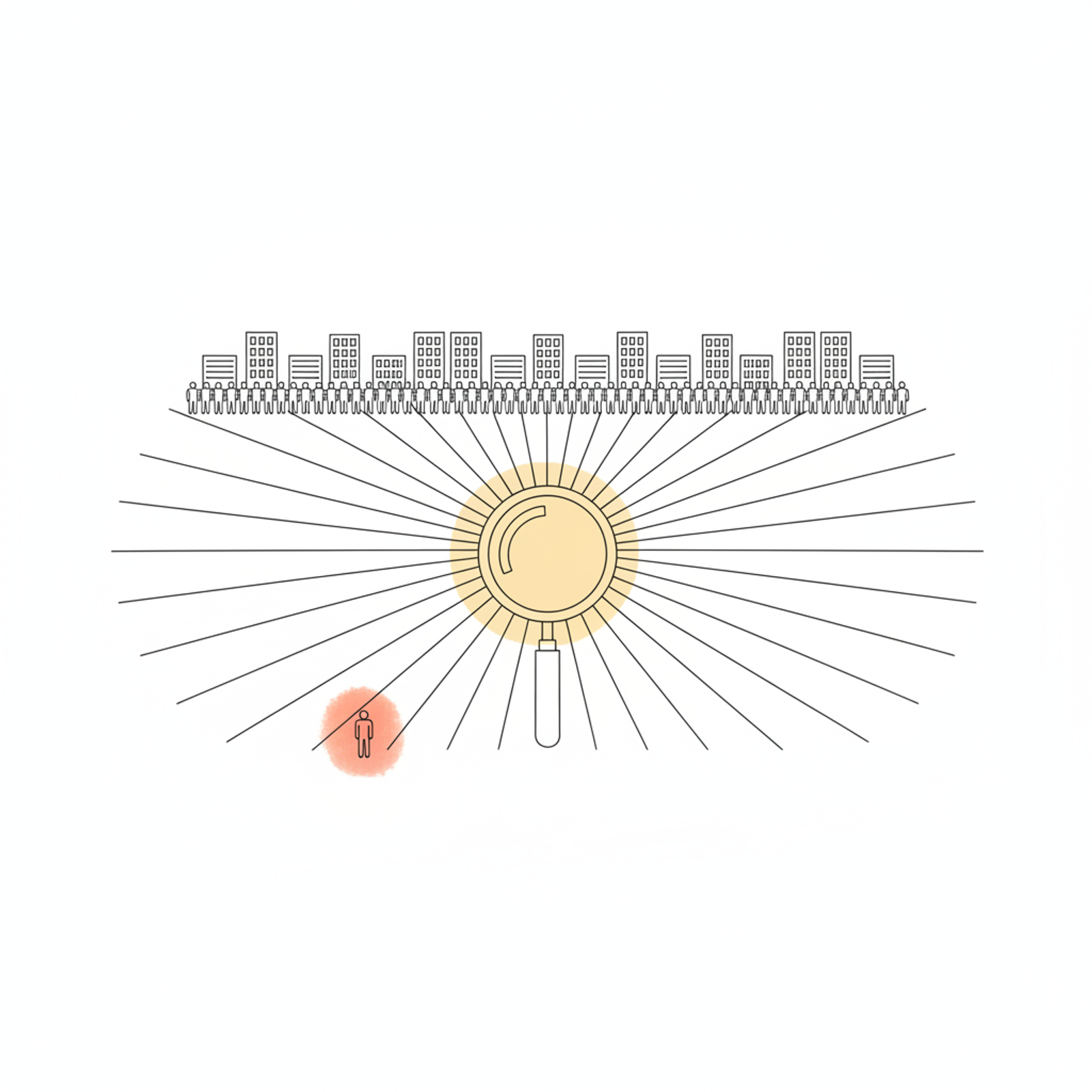
A landmark study of 4 million job applications shows how AI hiring tools hide their bias, why one rejection can become rejection everywhere, and why independent, position-level assessment is no longer optional.
Read