Trust Signal is our weekly read on digital trust, AI fairness, and the regulation closing in around them. The twist: almost the whole thing — scouting, scoring, drafting, illustrating — is run by an eight-agent AI team. A human (me) only signs off.
It lands every Tuesday at 08:00 CET, written for the people who have to act on this stuff: enterprise AI teams, researchers, compliance officers, founders. And when a week is genuinely quiet, the system skips the issue rather than pad it with noise — we'd rather earn the open than fill the inbox.
What's in every issue
Each issue is built around three editorial pillars, and you can toggle any of them on or off for your own inbox:
- 01The Trust Stack — digital identity, privacy, data sovereignty, trust frameworks.
- 02Fairness Watch — AI bias, algorithmic accountability, model auditing.
- 03Agency & Action — regulation, compliance, enforcement, policy moves.
Around those sit the recurring fixtures: a Hero Story leading the issue, the Trust Score Index (a weekly 0–100 composite of regulatory momentum, technical readiness and incident severity), Numbers of the Week, Paper of the Week, a curated Quote, Events & Deadlines with live regulatory countdowns, a Tool of the Week, and Field Notes — a short, human aside from me.
How it gets made
Every morning, the pipeline pulls 47 RSS feeds plus 7 hand-monitored sources across all three pillars, deduplicates them, and asks Claude to score each story against an eight-factor news-value framework — regulatory impact, human impact, technical significance, timeliness, prominence, controversy, novelty and actionability. On Sunday the orchestrator picks the strongest story as the Hero and up to three per pillar, Claude drafts the full issue, the Trust Score Index is computed, two illustrations are generated, and the whole thing renders into a branded HTML email.
Then it stops and waits for me. The draft is posted to Discord; nothing ships until I react with a ✅. If I don't, it doesn't send. That human gate is the point: the machine does the heavy lifting, a person owns the judgment.
“Trust by design. Agency by choice.”
The Trust Signal masthead
Built by an eight-agent team
Trust Signal is one workflow inside a larger crew of agents that run on our OpenClaw stack. Rex, our research analyst, owns the newsletter pipeline end to end; Kai, our developer, built it; the scoring and drafting run on Claude Sonnet. The wider team each has a job:
- 01Jill — Executive Coordinator, triages every request.
- 02Dante — local zero-knowledge AI; runs entirely on our own hardware.
- 03Cora — AI Fairness Auditor.
- 04Rex — Research Analyst; runs Trust Signal.
- 05Ravi — Data Engineer.
- 06Sentinel — Security Monitor.
- 07Lisa — Stakeholder Engagement and market intelligence.
- 08Kai — Developer & QA; built the newsletter system.
Read it, or subscribe
Subscribing is double opt-in and GDPR-compliant: confirm your email, pick the pillars you want, and unsubscribe in one click anytime. We never share your address, and delivery runs on our own infrastructure. You can browse every past issue first, no email required, in the public archive.
Get the week in AI trust and fairness, every Tuesday.
 ResearchOpen to read
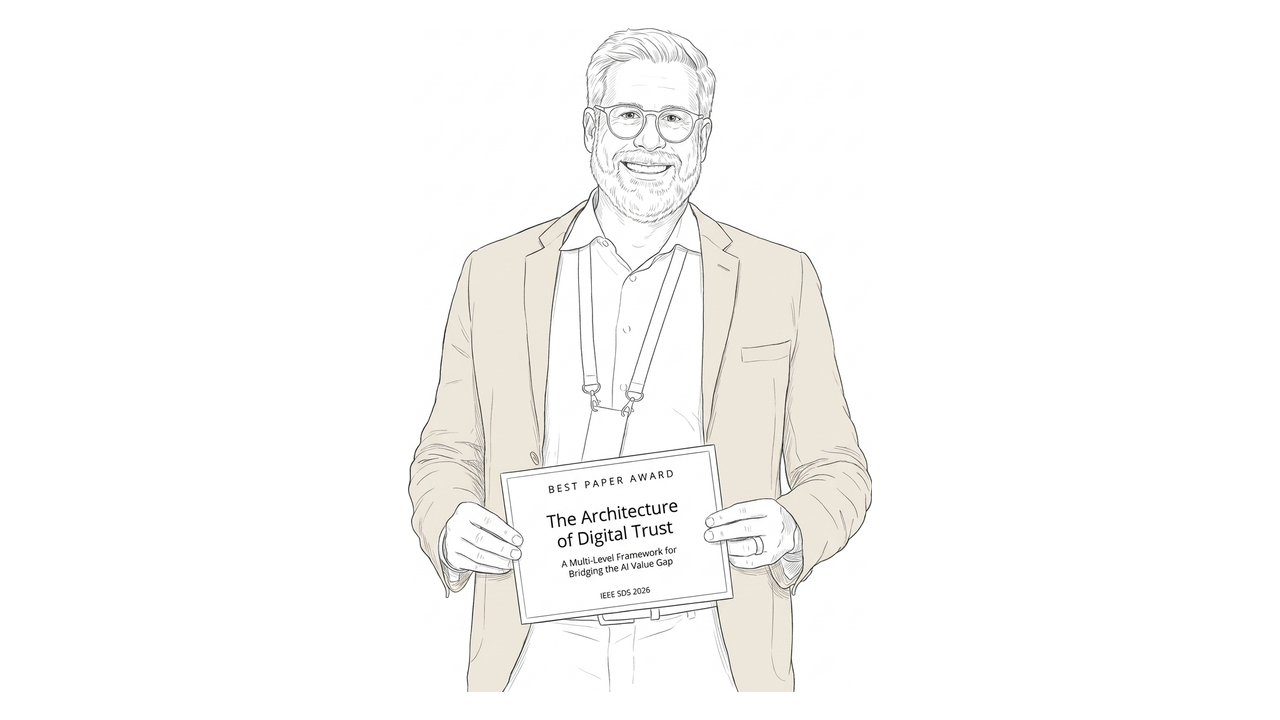
The Trust Problem Nobody Wants to Name
Everybody is spending on AI; almost nobody can say what they got back. A new paper, awarded the Best Paper Award at the IEEE Swiss Conference on Data Science and AI, names that gap and shows it is a trust problem wearing a technical costume: seven mechanisms, a four-layer architecture, an iceberg beneath it, and five design principles for closing it.
Read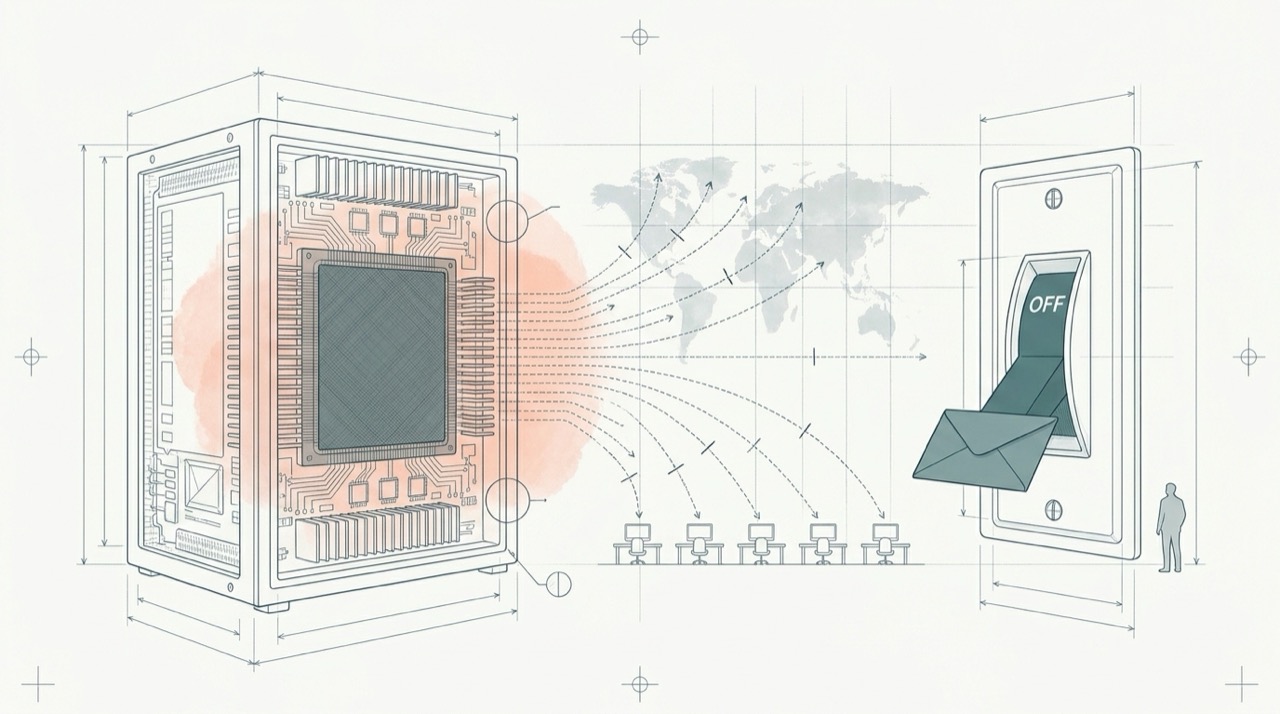 ResearchOpen to read
When a Model Becomes a Munition
A frontier AI model was switched off worldwide by a single government letter. Reading the June 2026 shutdown through the three-body picture of digital trust: how the kill switch stopped being a metaphor, why the most governable lab was governed least carefully of all, and what single-vendor, single-jurisdiction dependence now costs a board.
Read ResearchOpen to read
Agents Will Act for Us. Who Vouches for Them?
When agents start acting for us, trust moves from outputs to actors. Reading Michael Casey’s case for proof of control alongside our three-body picture of digital trust: where convenience quietly pulls authority toward a few global platforms, how validant.ai answers it, and a closed beta for scientific validation opening in Q3 2026.
Read