Reading about a fairness audit is one thing. Watching one happen is another. So we recorded two short demo videos that show the platform actually working — not slides, not mockups, the real product in motion.
Fairness tooling has a credibility problem: most of it is described, rarely shown. We wanted to close that gap. These two demo videos sit at opposite ends of the same workflow — the fast verdict, and the rigor underneath it — so you can see both the speed and the substance in a few minutes.
Demo one — Pulse: a complete audit in one sitting
Pulse is the quickest way to ask "is this model fair, and where isn't it?" The demo follows a single audit from the first upload to a signed-off verdict: groups defined, metrics computed, disparities surfaced, and the result mapped to EU AI Act risk tiers — without leaving the screen. If you only have two minutes, watch this one.
Demo two — Assessment Modules: the depth behind every verdict
A green light is only worth trusting if you can see what's behind it. The second demo opens up the Assessment Modules — the statistical machinery Pulse runs underneath: bootstrap confidence intervals, Bayesian and permutation tests, intersectional slicing, and full-pipeline coverage from preprocessing to production monitoring. This is the one for the people who'll be asked to defend the result.
Why we made them
Trust in an audit comes from seeing it, not being told about it. Together these demo videos answer the two questions every team asks first: how fast can we get an answer, and how far does the evidence go. Watch Pulse for the speed, watch Modules for the substance.
“Show the work. A fairness verdict you can't inspect is just another black box.”
Both demo videos play right here, or share them directly: validant.ai/watch/pulse and validant.ai/watch/modules.
 ResearchOpen to read
Precision Is Not Proof: The Trap in Every AI Fairness Verdict
A model that predicts perfectly stops insuring anyone; a verdict published without its detection limit invites you to assume the limit is zero. Two failures, one omission, and two borrowed words for keeping them apart.
Read ResearchOpen to read
The Trust Problem Nobody Wants to Name
Everybody is spending on AI; almost nobody can say what they got back. A new paper, awarded the Best Paper Award at the IEEE Swiss Conference on Data Science and AI, names that gap and shows it is a trust problem wearing a technical costume: seven mechanisms, a four-layer architecture, an iceberg beneath it, and five design principles for closing it.
Read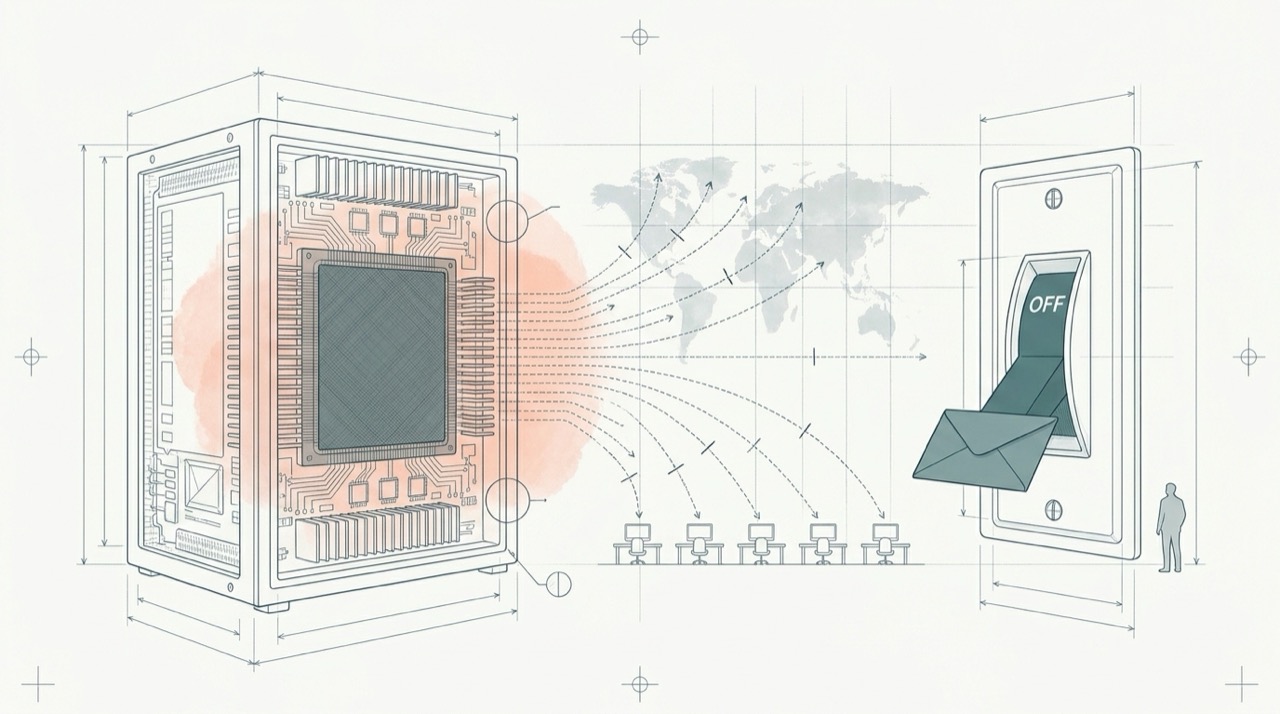 ResearchOpen to read
When a Model Becomes a Munition
A frontier AI model was switched off worldwide by a single government letter. Reading the June 2026 shutdown through the three-body picture of digital trust: how the kill switch stopped being a metaphor, why the most governable lab was governed least carefully of all, and what single-vendor, single-jurisdiction dependence now costs a board.
Read