
When software merely answered questions, trust was a quality problem: is the answer right, is it fair, is it safe? The moment software starts acting on our behalf, booking, buying, negotiating, filing, the question changes shape. Michael J. Casey, journalist and co-author of The Truth Machine, puts the new question plainly: the decisive issue is no longer only what an AI system outputs, but which actors stand behind it, and whether their authority over it can be proven rather than merely asserted.
Executive summary
He is right, and his argument lands precisely where our own work on digital trust has been pointing: trust is not a feature of a model; it is a relation between bodies in motion. This piece reads the recent argument from Michael Casey alongside our research piece Digital Trust Is an Orbit, Not a Pillar, maps the tensions he names onto the three-body picture, and shows where the validant.ai platform answers them today, where it will answer them next, and one announcement we are genuinely happy to make along the way.
Casey’s core observations deserve to be taken seriously, one by one. First: in an agentic economy, trust migrates from content to counterparties. We stop evaluating individual outputs and start evaluating the people, institutions and infrastructures that stand behind autonomous agents. Second: it is one thing to claim control over an agent and another to prove it. His notion of proof of control captures the difference between governance as assertion and governance as verifiable evidence. Third: the convenient default, outsourcing trust wholesale to a handful of global platform corporations, carries a structural cost. Centralised trust scales beautifully and fails catastrophically, and systems in which one actor holds all the authority drift toward arrangements no one would have chosen openly.
These are exactly the dynamics the three-body picture of digital trust predicts. When the organisation body, here a global platform, gains too much mass, the orbit between model, person and organisation stops closing. The answer is neither blind civil trust in corporate brands nor a retreat into philosophy. It is independent, continuous, honestly scoped assessment of all three bodies, plus instruments that return verifiable authority to the person. That is the validant.ai programme, and it takes a concrete step forward on 26 July 2026, when a closed beta for the scientific validation of the first modules and parts of the platform begins.
What Casey gets right
Casey’s piece earns its title. Four points stand out.
- 01Trust shifts from outputs to actors. When an agent transacts on your behalf, you cannot review every action it takes. You are forced to decide, in advance, who you trust: the developer of the model, the deployer who configured it, the issuer of its credentials. Trust becomes a question of counterparties, not content, which is precisely why anonymous benchmark scores travel so badly into the agentic world.
- 02Control must be provable, not asserted. Casey draws a sharp line between saying you have controls and demonstrating that you have them. Cryptographic mandates, verifiable credentials and audit evidence turn “trust us” into “check us”. In our vocabulary: trust is assessed, not asserted. The two formulations are the same discipline seen from two professions, the cryptographer’s and the auditor’s.
- 03Centralised trust outsourcing is a real temptation with a real price. The easiest path for any consumer or enterprise is to let one global corporation hold the keys: the agent, the identity, the data, the recourse. This civil trust, extended by default to a familiar brand, concentrates authority in a way that is convenient on day one and corrosive over time. A system in which one body defines the rules, runs the agents and adjudicates the disputes leaves the person with no independent ground to stand on.
- 04The alternative is sovereignty defined locally. Casey argues for an open, privacy-preserving, self-sovereign architecture in which enterprises and individuals hold proof of control over their data and their agents. Authority is anchored with the human principal, not absorbed into the platform.
None of this is anti-technology pessimism. It is the opposite: a description of the conditions under which delegation to machines can actually be safe enough to scale.
The same tension, seen as gravity
Read through the three-body lens, Casey’s critique describes a specific failure mode of the orbit. The three bodies of any AI deployment are the model, the person and the organisation, and trust is the orbit they trace together when they are kept in balance. Our earlier piece named three trade-offs that act like gravity between them: accuracy against privacy, oversight against autonomy, speed against assurance.
The agentic era adds that fourth pull, and it is the one Casey isolates: convenience against sovereignty, acting between the organisation and the person. Delegating everything to one trusted global platform minimises friction for the person and maximises mass for the organisation. Every increment of convenience transfers a little authority. None of the individual transfers looks dangerous. The sum is a body so heavy that the other two merely orbit it, and an orbit dominated by a single mass is not a trust relation; it is a dependency.
This is the tangle diagram from the orbit article in economic clothes, and the cure is the same: not to pretend the force away, but to name it, measure it and counterbalance it. Two counterweights exist. The first is independent assessment: an assessor with no stake in the platform, repeatedly checking all three bodies, the way a ratings agency checks an issuer. The second is self-sovereign instruments: credentials and mandates the person holds directly, so that authority over an agent is anchored in cryptography rather than in a service agreement. Casey supplies the philosophy of the second. The Iceberg Framework, our peer-reviewed four-layer model published at the 2026 IEEE Swiss Conference on Data Science and AI, supplies the measurement discipline of the first. They are not rivals. They are the two hands that keep the orbit closed.
Where agents sit in the orbit
Agentic AI does one more thing to the three-body picture: it blurs the line between the bodies. An agent acting under your mandate is part model, part extension of the person. When it misbehaves, is that a model failure, a consent failure or a governance failure? The honest answer is that it depends on the scope of the assessment, which is exactly why our assessment space names three dials explicitly: which body, which pathway, which audience. Agentic and multi-agent systems are their own pathway on that dial, planned and deliberately marked as such, because a method tuned for a predictive classifier tells you almost nothing about a workflow that acts in the world. Casey’s question, who is responsible when an agent acts on your behalf and gets it wrong, is the agentic pathway’s defining question, and it can only be answered with stated scope.
Mapping the critique to the platform
Casey’s demands translate, one for one, into the structure of the validant.ai offering.
| Casey’s demand | Body in the orbit | validant.ai answer | Status |
|---|---|---|---|
| Independent, verifiable evidence instead of asserted control | The organisation, and the orbit itself | Digital Trust: the iceberg.digital trust signal, continuous and independently assessed | Live, closed beta from 26 July |
| Agents and models that behave fairly and can show their reasoning | The model | AI Fairness & Explainability: Pulse, Navigator, the assessment modules and the open-source vfairness library | Live, closed beta from 26 July |
| Proof of control: authority over agents anchored with the human principal | The person | Self-Sovereign Identity: verifiable credentials and signed agent mandates, aligned with the Swiss e-ID and EUDI Wallet | Planned |
The footer of our own site states the ambition in one sentence: a digital foundation in which identity is self-sovereign, trust is verifiable, and personal AI agents act only in your interest. Read against Casey’s article, that sentence is not a slogan. It is a checklist, and the table above is its current state, stated honestly.
One structural difference matters and is worth being explicit about. validant.ai is not a platform asking for your civil trust. We operate as an independent assessor, closer in spirit to a ratings agency than to a vendor grading its own homework. We do not run your agents, hold your identity or sell you the model we evaluate. But independence is only half of it. We also put the assessment tools directly in the hands of every stakeholder, the person, the organisation and the external auditor alike, so each can reach informed, evidence-based decisions on their own measurements rather than on our word. The same rigour we apply is handed back to the people who build a system, govern it, are subject to it and review it from outside, as instruments they can run themselves. We are an enabler as much as an assessor. That independence is not a marketing position; it is the precondition for the assessment meaning anything at all. An orbit cannot be certified by one of its own bodies.
The announcement: closed beta on 26 July
Which brings us to the news. We are happy to announce that a closed beta for the scientific validation of the platform begins on 26 July 2026, covering selected first modules and parts of the validant.ai platform.
Scientific validation means what it says. The Iceberg Framework was published with its limitations stated openly; empirical validation across real deployment contexts was named as the next phase, not assumed. The closed beta is that phase beginning. Participants run assessments on the first production modules, the results are checked against known ground truth and documented protocols, and the findings feed back into both the platform and the research programme. The point is not to collect testimonials. The point is to subject our own instrument to the standard we apply to everyone else’s.
Participation is limited and deliberately small. If your organisation deploys AI, takes the agentic shift seriously and wants its trust posture assessed by an independent party rather than asserted by a vendor, this is the moment to raise your hand.
In one line
Casey asks the right question for the agentic era: who do we trust, and can they prove it? The three-body answer is that trust is the orbit the model, the person and the organisation trace together, that the gravest new force is convenience pulling authority toward a few heavy platforms, and that the counterweights are independent continuous assessment and self-sovereign proof of control. We build the first today and the second next, and starting on 26 July, the instrument itself goes under scientific scrutiny.
“In the agentic era, the question is no longer whether the answer is right. It is whether the actor behind the answer can prove who holds the controls.”
Agents Will Act for Us. Who Vouches for Them?
Trust is assessed, not asserted. If you deploy AI and want the first modules of the platform put to the test in your own context, the 26 July closed beta is open to a small group. Write to hello@validant.ai with the subject “Closed Beta”, or request a demo. Seats are limited and assigned in order of fit, not order of arrival.
Sources and further reading
- 01Casey, M. J. (2026). In the Agentic AI Era, Who We Trust Matters More Than Ever. LinkedIn.
- 02Glinz, D. (2026). The Architecture of Digital Trust: A Multi-Level Framework for Bridging the AI Value Gap. 2026 IEEE Swiss Conference on Data Science and AI (SDS), Zurich, pp. 60-67.
- 03Glinz, D. (2026). Digital Trust Is an Orbit, Not a Pillar. validant.ai Signal.
- 04Casey, M. J., & Vigna, P. (2018). The Truth Machine: The Blockchain and the Future of Everything. St. Martin’s Press.
- 05National Institute of Standards and Technology. (2023). Artificial Intelligence Risk Management Framework (AI RMF 1.0). NIST AI 100-1.
- 06World Economic Forum. (2022). Earning Digital Trust: Decision-making for Trustworthy Technologies.
 ResearchOpen to read
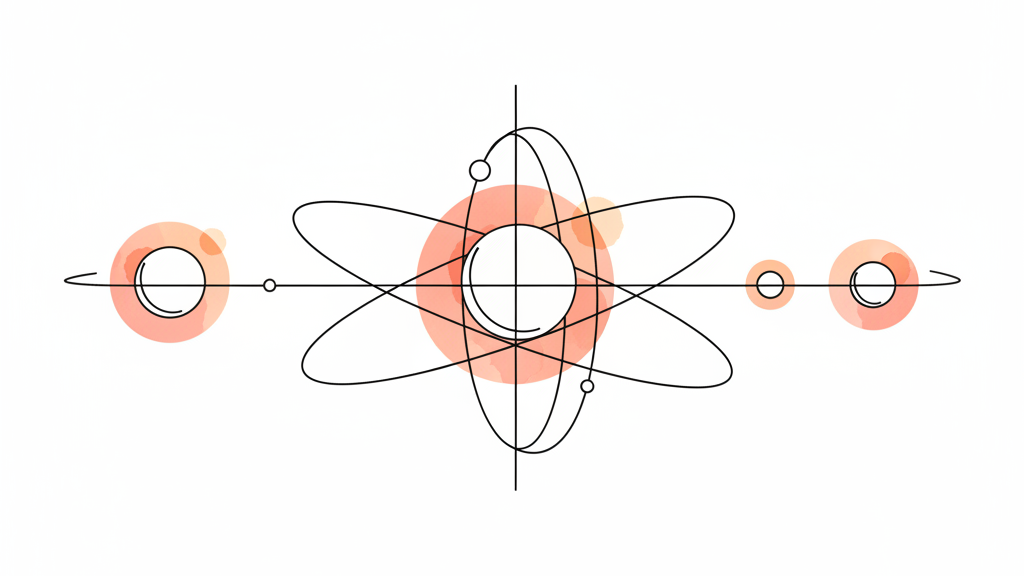
Digital Trust Is an Orbit, Not a Pillar
Trust is not one more pillar to stack. It is the orbit three bodies trace together: the model, the person and the organisation. Why the three-body problem is the honest metaphor for trustworthy AI, and how to tell where you are in the orbit.
Read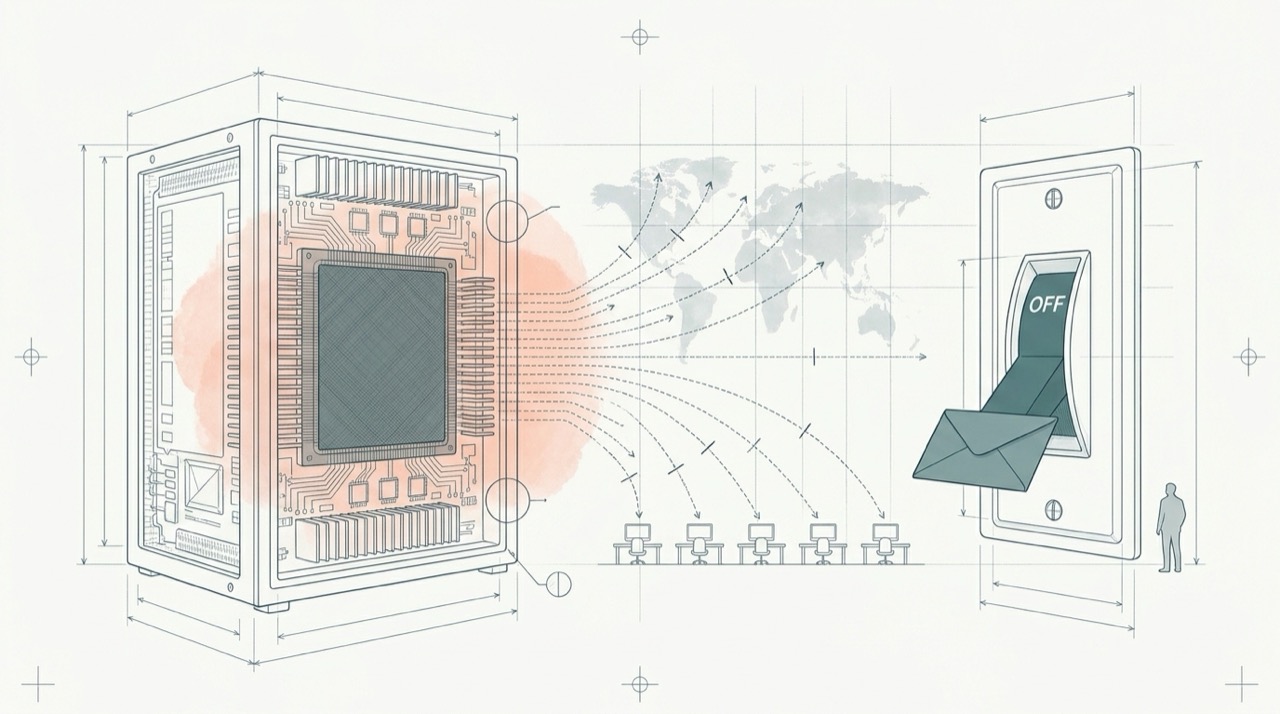 ResearchOpen to read
When a Model Becomes a Munition
A frontier AI model was switched off worldwide by a single government letter. Reading the June 2026 shutdown through the three-body picture of digital trust: how the kill switch stopped being a metaphor, why the most governable lab was governed least carefully of all, and what single-vendor, single-jurisdiction dependence now costs a board.
Read